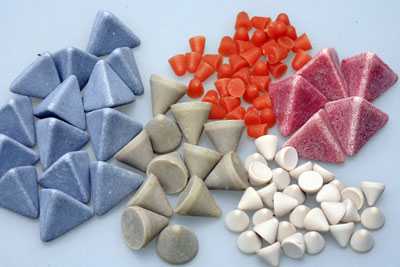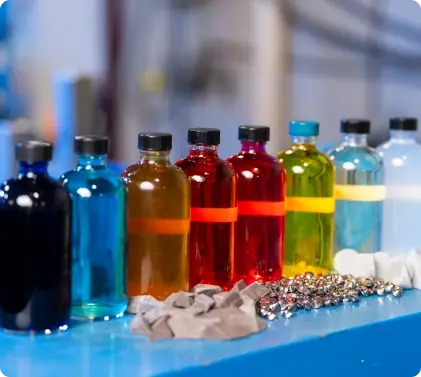
Vibra will blast the parts and paint according to your specifications. Send samples to our Parts Processing Laboratory for a quotation or give us a call: 905.625.9955 or e-mail us so that we can discuss your special needs.
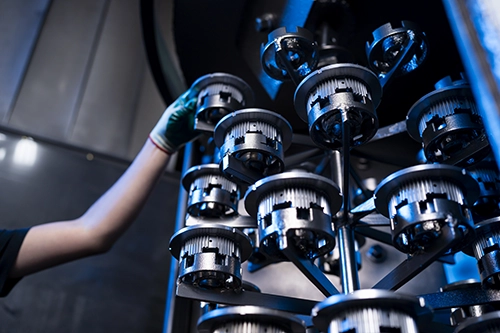
Blasting and Painting
You May Also Like
Robotic Peening
Robotic Peening Breakthroughs That Are Transforming Surface Treatment Today
Introduction
Robotic peening is shaking up the surface treatment game—and I’m here for it. Gone are the days of guesswork, operator fatigue, and inconsistent coverage. We’re entering an era where robots don’t just replace hands; they perfect the art. And honestly? That’s exciting. Imagine something as rugged as shot peening getting a sleek robotic makeover that delivers surgical precision. You see, when machines learn to master the science of stress manipulation, durability becomes an engineered guarantee, not a hopeful outcome. Let’s dig into why robotic peening isn’t just a trend—it’s the standard every high‑performance industry didn’t know it was waiting for.
Understanding the basics of robotic peening and how it differs from traditional methods
Robotic peening redefines the traditional shot peening approach by integrating programmable robots in place of manual or semi‑automated machines. In conventional methods, an operator controls the nozzle or wheel to bombard a component with abrasive media—relying on experience and repetitive motion. With robotic peening, the robot arm’s path, speed, angle, and peening intensity are pre‑programmed, ensuring uniform coverage and repeatable performance.
This marks a huge leap. Traditional peening often suffers from human‑induced variability—different operators, fatigue, even a small misalignment can throw off the optimal coverage. Robotic systems eliminate those variables. They follow precise toolpaths with millimeter accuracy, apply the same force consistently, and avoid sloppy coverage zones that lead to under‑ or over‑peening.
Another difference lies in control and documentation. Many robotic peening systems integrate process monitoring sensors and closed‑loop feedback. That means real‑time tracking of variables like air pressure, peening intensity, and coverage rate—logging them for quality assurance. Traditional systems often lack such traceability, making certification harder in regulated industries.
The rise of automation in surface finishing and why robotic peening is leading the way
Automation is sweeping across surface finishing—from deburring and polishing to coating. But peening is unique: it actively alters material properties, not just appearance. That’s why robotic peening is at the forefront. Industries like aerospace and automotive demand high‑reliability components with verified fatigue resistance. Robotic systems address that demand by reducing variability and cementing process traceability.
Industry 4.0 has set a new bar. Manufacturers want interconnected systems that feed data into MES (Manufacturing Execution Systems) and perform predictive maintenance. Robotic peening aligns perfectly—it can record data, trigger alerts if parameters drift, and integrate into fully automated production lines. That’s a major draw for OEMs looking to digitize operations.
Also, workforce dynamics play a role. Skilled labor is in short supply, and repetitive tasks like standing over a blast cabinet are no longer acceptable long‑term roles. Automation frees up personnel to focus on higher‑value tasks like inspection, analysis, and process improvement. Robotic peening not only meets quality demands—it improves job satisfaction and safety.
Core components and working principles of a robotic peening system
A typical robotic peening cell includes several key parts: the industrial robot arm, the peening gun (typically air‑blasted or wheel‑type), media delivery and recovery systems, safety enclosures, and control software. The robot arm positions the gun at programmed angles and velocities. The media system handles abrasive shot or beads, replenishing the supply and recycling spent media.
Under the hood, the software defines toolpaths based on the component’s CAD model. Parameters like standoff distance, peening intensity (Almen intensity or arc height), coverage percentage, and pass count can all be tuned. The robot executes moves with high fidelity—this level of control is impossible with manual methods.
Closed‑loop monitoring is critical. Sensors track peening intensity (via devices like in‑line Almen sensors), air pressure, and flow rate. If variations occur, the system automatically adjusts or flags the run. This self‑governing feedback ensures every part meets specs, critical in aerospace or safety‑critical industries.
Benefits of robotic peening in aerospace, automotive, and heavy machinery industries
Aerospace components like landing gear struts, turbine blades, and fasteners gain immense benefit from consistent fatigue strength. Robotic peening ensures every critical feature gets the same depth and coverage—eliminating weak links. Reduced scrap rates, fewer fatigue failures in service, and better lifecycle data all follow.
In automotive, shot‑peened parts like crankshafts, gears, and suspension components see longer lives and higher performance under stress. Robotic peening boosts repeatability, enabling OEMs to claim tighter warranties and lower maintenance costs. Especially for EV drivetrains, where weight and stress margins are tighter than ever, every psi of compressive surface stress counts.
Heavy machinery and oil & gas equipment get similar benefits. Hydraulic cylinders, shafts, and tubular steel suffer from cyclic loading and environmental exposure. Robotic peening can be applied even in retrofit cells, boosting structural integrity and preventing premature failure in field components. This translates to lower downtime and replacement expenses.
How robotic peening enhances fatigue resistance and component longevity
Fatigue starts at the surface—tiny cracks grow under cyclic loading. Shot peening embeds compressive residual stress that opposes crack initiation. Robotic peening ensures the required stress depth (often 0.3 mm or more) and uniformity across every edge, bore, and face. That consistency increases lifespan by up to 300% in some test cases.
Let’s get specific: test samples peened robotically vs manually often show a higher Almen arc height—indicating deeper residual stress—and nearly identical coverage across repeated runs. That means a part isn’t only stronger—it won’t surprise you by popping when you least expect it.
Moreover, inconsistencies in manual peening can create hotspots of tensile stress—opposite to what we want. Robotic peening eliminates these anomalies. When every pass is identical, you avoid fatigue cracks caused by process errors. That’s reliability—which industries can quantify in MTBF (Mean Time Between Failure) figures.
Case studies and real-world data proving robotic peening performance
In one aerospace OEM study, robotic peened landing‑gear bolts outperformed manually peened samples in full fatigue testing—enduring 1.8 × longer before crack initiation. That meant fewer replacements, less downtime, and a bump in airworthiness margins.
An automotive supplier replaced manual peening on transmission gears with robotic cells. They reduced scrap by 45%, improved consistency by ±5%, and increased line throughput 25%—all while reducing labor hours by 30%.
A heavy‑industry retrofit project integrated a robotic cell to peen large hydraulic pistons. The result? A 2× increase in fatigue life and a 20% reduction in on‑site rework. Operators reported a safer, cleaner work area—and management logged solid ROI in under 18 months.
Challenges and limitations of implementing robotic peening in industrial settings
Robotic peening isn’t plug‑and‑play. Programming toolpaths and tuning parameters requires expertise—both robotics and materials science know‑how are needed. That steepens the learning curve compared to manual peening.
Space and infrastructure can be hurdles. These cells need enclosures, ventilation, media-reclamation systems, and safety interlocks. Smaller shops may struggle to carve out a peening bay, and retrofits can require concrete pads and compressed‑air upgrades.
Finally, ROI analysis must account for upfront costs. Robot stations can range from US $150K to $500K+ depending on arm complexity, cell size, automation level, and monitoring systems. For small‑batch shops, the cost must be justified by improved yield, quality, or throughput.
Key considerations for selecting a robotic peening solution for your application
First, define peening intensity requirements. Do you need moderate coverage or high‑intensity peening with deep compressive stress (~.010–.020″ arc heights)? That determines the air volume, nozzle selection, and housing.
Next, size and geometry matter. Large shafts vs small precision parts will affect robot arm reach, payload capacity, and cell design. Partnering with integrators who can prototype the robot toolpath on sample parts is crucial.
Don’t forget monitoring features. Systems with real‑time intensity measurement and coverage verification help your audit trail and certification if you’re in regulated industries. Software integration—like link to MES or Industry 4.0 dashboards—is also a big plus.
Emerging trends: AI integration, adaptive algorithms, and real-time feedback in robotic peening
Nowadays, peening robots are getting smarter. AI‑driven adaptive peening systems analyze sensor data mid‑cycle and adjust parameters to hit the perfect intensity. That means even worn nozzles or changing media size won’t compromise the process.
Machine‑learning can predict when abrasive media needs replenishment or when tool wear is nearing thresholds. Maintenance becomes predictive—not just scheduled. That improves uptime and prevents surprise failures.
Real‑time vision systems, too, can inspect coverage in situ. Combined with sensor data, robots can validate complete coverage before toolpath ends—triggering an automatic new pass or flagging parts if they don’t meet criteria.
Future outlook: How robotic peening is shaping the next generation of manufacturing
Robotic peening is poised to expand beyond heavy machinery into more niche applications—medical implants, 3D‑printed aerospace parts, even consumer electronics shells with stress‑relief requirements. As cell costs drop and competence spreads, adoption will grow.
Integration with digital twins means peening parameters will be simulated before real‑world runs. That minimizes trial time and ensures first‑pass success. The robot becomes part of a fully digital production ecosystem.
Eventually, every manufacturing line handling metal components may include a peening station—automated, integrated, monitored. Surface stress control isn’t a niche add‑on anymore—it’s a standard quality requirement. Robotic peening is leading that transformation.
Conclusion
Robotic peening isn’t just the next phase in surface treatment—it’s the precision revolution manufacturers didn’t realize they needed until now. We’ve unpacked how this technology outperforms traditional methods, boosts fatigue life, drives consistency, and plugs seamlessly into automated production lines. From aerospace to automotive and beyond, the data is clear: robotic peening delivers smarter, safer, and stronger outcomes.
As industries chase tighter tolerances and longer-lasting parts, the question isn’t if robotic peening fits into your workflow—it’s when. So, whether you’re a plant manager looking to boost efficiency or a curious engineer chasing that extra edge in durability, now’s the time to start the conversation.
Got thoughts on where robotic peening is heading? Leave a comment below or share this post with someone who’s ready to automate smarter.
Contamination Analysis and Technical Cleanliness Testing
Ultimate Guide to Contamination Analysis and Technical Cleanliness
Introduction to Contamination Analysis
What is Contamination Analysis?
Contamination refers to foreign particles and residues that form during the manufacturing process of components. These contaminants can stick to surfaces, reducing system performance or even causing major failures. At Vibra Finish, we specialize in surface finishing, ensuring your parts are cleaned and finished to remove all unwanted particles. We adhere to strict quality standards to meet specific contamination requirements, with ISO 16232 being the most recognized benchmark in this field.
Our process involves rinsing the parts with a special extraction fluid to dislodge contaminants. This fluid is then filtered, and the particles are analyzed under a high-magnification microscope, which automatically identifies, counts, and classifies them. This technique allows us to certify our washing process, ensuring your components meet the highest cleanliness standards.
Contamination analysis is critical in industries where precision and reliability are essential. In automotive manufacturing, it ensures that critical components like fuel injectors and braking systems perform flawlessly. The aerospace sector relies on cleanliness to maintain safety and efficiency in high-performance systems. Electronics require contamination-free surfaces to prevent short circuits and ensure the longevity of sensitive components. Vibra Finish provides solutions tailored to meet the rigorous standards of these industries.
The Importance of Technical Cleanliness
Contaminants can disrupt the performance of mechanical and electronic systems, and lead to accelerated wear, reduced lifespan and catastrophic failures. Technical cleanliness goes beyond a superficial inspection; it involves rigorous, repeatable analysis that scientifically assess and verify the absence of contamination.
In industries like automotive, aerospace, and healthcare, where precision, safety, and high production volumes are critical, contamination can lead to catastrophic consequences such as costly recalls, system failures, or life-threatening risks. Ensuring technical cleanliness through rigorous and reliable processes not only safeguards operations and users but also controls costs and maintains the dependability of millions of components produced annually.
Key Standards and Regulations for Cleanliness Testing
ISO 16232: The Automotive Cleanliness Benchmark
ISO 16232 establishes comprehensive methods for assessing particle contamination in automotive components, offering manufacturers a structured framework for compliance. It defines key metrics for particle size and distribution, specifies the materials and equipment required—such as extraction fluids—and outlines the necessary report details and personnel training for accurate implementation.
The procedure involves rinsing the cleaned surfaces with a jet of extraction fluid to dislodge any remaining contaminants. The resulting fluid is collected, filtered, and the filter is analyzed under a high-magnification microscope equipped with image analysis capabilities. Using specialized software, all particles are identified, measured, and counted. These findings are compiled into a detailed report. Approval is based on contamination criteria, which define the maximum allowable number of particles within specific size ranges.
VDA 19: Ensuring Cleanliness in Manufacturing
VDA 19 complements ISO 16232 by addressing cleanliness in broader manufacturing environments. While ISO 16232 focuses on automotive applications, VDA 19, developed by the German Association of the Automotive Industry (Verband der Automobilindustrie, VDA), extends its scope to include industries beyond road vehicles. Together, these standards establish the benchmark for industrial cleanliness.
VDA 19 is widely used in Europe and includes specific guidelines for maintaining cleanliness in assembly environments. With expertise in both ISO 16232 and VDA 19, Vibra can perform cleanliness testing to ensure your parts meet international standards, enabling you to confidently sell your products worldwide.
Additional Cleanliness Standards in Industrial Applications
Different industries, such as medical devices and precision instruments, have developed specific cleanliness guidelines to meet their unique requirements. At Vibra, we excel in adapting our processes to meet the precise needs of our customers, including renowned companies like Héroux Devtek, Pratt & Whitney, Rolls Royce, and General Motors.
As technology advances, the demand for higher accuracy and more detailed information continues to grow. At Vibra, we continuously evolve. Our engineers stay at the forefront of industry innovations, and we invest in state-of-the-art equipment to exceed your expectations. In fact, we already have the tools you may not yet know you need. For instance, our advanced Keyence microscope features next-generation imaging capabilities, high-performance software, and a polarizer to identify metallic particles with precision. This ensures we deliver unmatched cleanliness analysis for your most demanding applications. Our microscope can perform gravimetric, elemental and Light scattering method.
Understanding Contamination Particle Size and Its Role
Why Particle Size Matters in Cleanliness Analysis
Larger particles can block fluid passages reducing the lubrication effect, while microscopic particles may accelerate wear. Controlling particle size ensures efficiency and reliability.
Advanced Methods for Measuring Particle Size
We use cutting-edge digital microscopy to image and analyze particles with precision. Our state-of-the-art Keyence device offers ultra-high-definition imaging, advanced illumination, shadowing techniques, and powerful software. This allows us to achieve resolutions comparable to expensive SEM devices, but with greater efficiency and ease.
The software automatically detects and measures particles, ensuring consistent and repeatable results. Our experienced operators carefully review all images and can re-examine individual particles when necessary to maintain accuracy. This meticulous process ensures that every particle adheres to strict quality standards before validation. To meet stringent aerospace requirements, all results and applied filters are securely recorded for full traceability.
Methods and Techniques for Cleanliness Testing
Overview of Cleanliness Testing Procedures
At our facility, we use a variety of cleanliness testing techniques to ensure your components meet the highest quality standards.
- Optical Imaging Analysis: This is our primary method, where we use advanced microscopes to observe and measure particle sizes. The results provide detailed sizing distribution, which directly correlates to the cleanliness level of the part and the efficiency of the washing process. This technique can be complemented by elemental analysis, which helps identify the material composition of the particles, such as metallic or non-metallic substances.
- Gravimetric Analysis: In this method, we weigh the filters before and after filtering the extraction fluid. The difference in weight, caused by the residues remaining on the filter, indicates the level of contamination on the part.
Comparing Gravimetric and Microscopic Testing
While both methods are effective, they offer different advantages:
- Gravimetric Analysis provides direct, measurable results but is purely quantitative.
- Optical Imaging Analysis in microscope testing provides both qualitative and quantitative data. It identifies the type of contaminants (e.g., dust, fibers, metals) and measures their size distribution and quantity, offering a more comprehensive understanding of cleanliness.
Optical imaging requires more specialized equipment, such as calibrated microscopes, to meet stringent quality standards, while gravimetric is simpler and requires only a high-accuracy weighing system. Both methods are valuable, and we carefully select the most appropriate one based on your specific cleanliness requirements. We handle the entire process, including equipment management, so you can focus on your operations.
Cleanliness of Components and Systems
Achieving Cleanliness in Automotive Manufacturing
In automotive manufacturing, cleanliness in critical systems like fuel injection is essential. Even the smallest particle can contaminate fluids like gasoline or oil in brand new vehicles. This contamination can compromise engine performance, reduce longevity, and impact overall safety.
We use advanced inspection techniques to ensure all parts meet the required cleanliness standards. Our quality process adheres to the ISO 16232 standard, and we can adapt to your specific requirements. Our methods include microscopic analysis, gravimetric testing, and elemental identification.
Surface Cleanliness in Precision Industries
Maintaining surface cleanliness is a major challenge in industries like aerospace and electronics, where even trace amounts of contamination can compromise performance and safety. The slightest touch from a human hand or dust in the air can deposit particles on a surface. Even a poorly managed industrial washing process can introduce contamination, particularly when fluids are involved.
To address these challenges, our washing processes follow the strictest quality standards from military and aerospace, including AS9100D and NADCAP procedures. These standards guide not only the purity of our products but also our daily operations. Our employees are trained to ensure contamination-free surfaces, and our management conducts regular process improvement reviews. We minimize human contact, especially after washing, and maintain a Foreign Object Debris (FOD)-free environment. By adhering to these practices, we ensure that all components meet the highest cleanliness standards required in precision industries.
Innovations in Part Washing and Cleanliness Control
Role of Part Washing in Cleanliness Compliance
Effective part washing is critical in maintaining cleanliness compliance across industries. It plays a key role in removing contaminants, such as dust, oils, metal shavings, and other particles, which can compromise the performance and safety of critical systems. Without proper washing, even a single contaminant can pollute an entire fluid system, creating a cascading effect that leads to further failures and contamination of other connected systems. To prevent costly product recalls, it’s essential to implement thorough and effective part washing.
Vibra offers advanced part washing solutions that meet the highest standards of cleanliness and compliance. Suitable for a wide range of industries, Vibra’s solutions and certifications ensure thorough and efficient cleaning, eliminating the risk of system failures and product recalls.
Emerging Technologies for Contamination Control
The ISO 16232 standard, introduced in 2007, addressed the challenge of imaging micron-sized particles, which previously required costly electron microscopy and couldn’t verify cleanliness specifications effectively. By the early 2010s, advancements in particle analysis software enabled optical microscopes to perform ISO 16232 tests efficiently. More recently, techniques have advanced further allowing for determination of particle composition using laser-based methods. These provide critical insights for troubleshooting washing processes. These advancements are currently being integrated into new quality standards.
At Vibra, we use the Keyence VHX Series digital microscope to deliver precise ISO 16232 cleanliness testing. This advanced system combines high-resolution imaging with innovative illumination techniques, essential for detecting and analyzing particles to meet stringent cleanliness standards. With fully automated operation through embedded software, the VHX Series ensures seamless compliance with quality requirements, enhancing accuracy and efficiency in contamination analysis.
Challenges in Contamination Analysis
Common Contaminants in Manufacturing
Sources of contamination in industrial processes are diverse, but airborne dust particles settling on surfaces remain the primary issue in such settings. Additionally, materials like metal shavings, fibers, or blasting media often contribute significantly, especially when carried over from other manufacturing steps. Identifying and controlling these sources is essential to maintain clean production environments.
Preventing particle contamination during production requires strict control at every stage. Parts are unpacked, washed, and repackaged immediately to avoid unnecessary exposure. Our fully enclosed washer uses filtered air and washing fluids to eliminate the risk of contaminants entering the system. Once cleaned, parts are promptly protected to ensure they remain dust-free, with minimal handling to prevent exposure to external contaminants. Maintaining a clean environment and ensuring proper upkeep of washing fluid tanks are crucial to avoid foreign object debris (FOD). By reducing unnecessary operations and keeping each step of the process specialized and controlled, we minimize the risk of contamination, ensuring the highest production standards.
Tools and Technologies for Cleanliness Testing
Vibra’s Cleanliness Verification Tools
At Vibra, we leverage cutting-edge technology to deliver precise and reliable cleanliness verification. Our automated Keyence system stands at the forefront of innovation, embedding advanced software that handles every aspect of the cleanliness inspection process. From scanning and detecting particles to measuring their size and generating comprehensive reports, this system ensures accuracy and efficiency at every step.
The seamless integration of these features not only speeds up the verification process but also ensures compliance with stringent industry standards, giving you confidence in your products’ quality. What sets our system apart is its error-proof design. The automation minimizes human error by eliminating the guesswork, as the software performs most of the heavy lifting. Coupled with operator oversight, this creates a double-verification system that leaves no room for mistakes, guaranteeing unmatched reliability. By choosing Vibra, you’re not just investing in cleanliness verification; you’re partnering with a team that combines technological expertise with a commitment to excellence in compliance and quality assurance.
Innovations in Particle Identification
Scanning Electron Microscopy (SEM) now incorporates highly accurate Energy Dispersive Spectroscopy (EDS) systems, using X-ray diffraction to identify the elemental composition of even the smallest particles. Meanwhile, advancements in digital microscopy are narrowing the gap, with integrated laser modules that vaporize a tiny portion of a particle to generate plasma, enabling precise elemental identification.
Emerging tools for faster and more accurate analysis: Advancements in digital microscopy and software have revolutionized particle analysis, automating tasks like image stitching, focusing, and particle measurement on filters. These tools streamline operations by eliminating manual intervention during imaging and reporting, reducing human error while retaining expert validation where necessary.
Real-World Applications and Success Stories
Future of Cleanliness Testing and Standards
Trends in Cleanliness Testing Technologies
Cleanliness testing is evolving rapidly, driven by cutting-edge technologies and a focus on sustainability. AI and machine learning, embedded in digital microscopes for image post-treatment, are transforming particle analysis by enabling automated, highly accurate detection and classification of contaminants. These advanced tools reduce manual effort and provide real-time insights, helping industries meet strict cleanliness standards with unmatched efficiency.
Part washing has been a well-established process for years, but it has long relied solely on expertise, lacking consistent control and verification. Cleanliness testing, supported by the latest technological advancements and standardized methods, now offers a definitive and scientific way to ensure that parts are not only cleaned but meet precise reliability standards. By integrating these innovations, cleanliness testing bridges the gap between assumption and assurance, providing the confidence that their parts are truly ready for use.
Anticipated Updates to ISO and VDA Standards
The future of cleanliness testing standards, including ISO 16232 and VDA 19, highlights an increasing focus on advanced particle size analysis and chemical composition identification. Upcoming revisions are expected to demand the identification of the particle size, shape, and chemical properties. These capabilities are critical for pinpointing contamination sources and resolving issues within manufacturing processes. Cleanliness verification will evolve beyond traditional extraction and particle counting to include comprehensive material analysis that predicts and prevents potential failures.
At Vibra, we are uniquely positioned to help you navigate these changes. Our expertise in cleanliness testing, paired with state-of-the-art equipment, ensures we are always one step ahead of industry demands. We provide solutions that meet not only today’s standards but also those of tomorrow—often before you even realize the need. Trust Vibra to deliver the precision, reliability, and foresight required to keep your processes clean and your products at the forefront of innovation.
FAQs About Contamination Analysis and Cleanliness Testing
What is the Difference Between ISO 16232 and VDA 19?
-> VDA 19 expands on ISO 16232, addressing cleanliness in broader manufacturing environments beyond automotive applications. Widely used in Europe, it provides specific guidelines for assembly environments. Vibra’s expertise in both standards ensures your parts meet international cleanliness requirements, ensuring global market compliance.
How is Particle Size Measured in Cleanliness Testing?
-> We use a contaminant-free fluid to rinse the part, allowing it to extract any particles during the process. After rinsing, we filter the fluid to capture the particles. Finally, we analyze the collected particles on the filter using an advanced digital microscope.
Are You Able to Differentiate Metallic from Non-Metallic Particles During Cleanliness Analysis?
-> Yes. Our cutting-edge equipment uses advanced illumination technology to analyze particle surface reflections. The results are then measured and compared to a database to differentiate metallic from non-metallic materials.
The Ultimate Guide to Glass Bead Blasting: Techniques, Benefits, and Best Practices
At Vibra Finish Ltd., we take pride in offering high-quality surface finishing solutions, and glass bead blasting is one of the most effective techniques for achieving smooth, clean, and visually appealing surfaces. This guide will provide an in-depth look at glass bead blasting, from its process to its many applications, benefits, and best practices.
This method is widely used across industries such as automotive, aerospace, and general manufacturing, where it plays a crucial role in removing contaminants like rust, old paint, and debris, while ensuring the base material remains undamaged.
What is Glass Bead Blasting?
Definition and Overview
Glass bead blasting is a non-abrasive surface finishing process where spherical glass beads are shot at high pressure onto a surface. The technique is commonly used to clean, polish, and prepare surfaces without damaging the material underneath. Unlike other abrasive methods, glass bead blasting leaves behind a smooth, uniform finish, making it ideal for industries where aesthetics and surface integrity are key.
This method is widely used across industries such as automotive, aerospace, and general manufacturing, where it plays a crucial role in removing contaminants like rust, old paint, and debris, while ensuring the base material remains undamaged.
History and Evolution of Glass Bead Blasting
Glass bead blasting has come a long way since its introduction. Early methods of sandblasting were highly abrasive, which often led to material damage. However, the development of glass bead media offered a less aggressive yet equally effective solution. Over time, advancements in equipment, such as modern blasting cabinets and nozzles, have made glass blasting more precise and efficient, enabling it to be used in more delicate and high-precision industries like aerospace and medical manufacturing.How Glass Bead Blasting Works
The Blasting Process in Detail
The glass bead blasting process involves several key steps:-
- The surface to be treated is cleaned and prepped.
-
- Glass beads for blasting are loaded into a blasting machine.
-
- Compressed air propels the beads through a nozzle, directed at the target surface.
-
- The beads impact the surface, gently removing impurities without altering the material’s dimensions.
Equipment and Tools for Glass Bead Blasting
Successful glass bead blasting requires specialized equipment, including:-
- Blasting cabinets to contain the media.
-
- Nozzles of varying sizes for different applications.
-
- Air compressors to generate the high pressure needed for blasting.
Benefits of Glass Bead Blasting
Surface Finish and Aesthetic Improvements
Glass bead blasting is highly valued for its ability to create smooth, satin, or matte finishes. This is particularly important for applications where appearance and texture matter, such as automotive parts or decorative metals. It not only improves the look of the material but also enhances its ability to bond with coatings, paints, or adhesives.Non-Abrasive and Environmentally Friendly Solution
One of the primary advantages of glass bead blasting is that it’s a non-abrasive technique, making it safe for surfaces like aluminum and stainless steel, where preserving the material’s integrity is essential. Additionally, glass bead media is environmentally friendly. The beads are made from recycled glass and can be reused multiple times, making them a sustainable option compared to other blasting materials.Common Applications of Glass Bead Blasting
Automotive Industry
In the automotive world, bead blasting is commonly used for restoring vintage car parts, cleaning engine components, and preparing metal surfaces for painting or powder coating. The process ensures a smooth, rust-free surface without damaging the metal, making it ideal for sensitive automotive restoration projects.Aerospace Industry
In the aerospace industry, glass bead blasting is used to clean and prepare parts, ensuring that components are free from debris and ready for assembly or coating. This technique is valued for its precision and non-damaging nature, which is critical in aerospace applications where material integrity is paramount.General Manufacturing and Maintenance
From metal fabrication to machinery maintenance, glass bead blasting is widely used to clean, deburr, and prepare surfaces for further processing. The technique is effective for removing contaminants like scale and rust while preserving the material’s surface properties.Glass Bead Blasting vs. Other Blasting Methods
Glass Bead Blasting vs. Sandblasting
Compared to traditional sandblasting, glass bead blasting is less aggressive, offering a gentler option for delicate surfaces. Sandblasting can wear away material over time, making it unsuitable for projects where maintaining surface integrity is important. Glass blasting is often preferred for jobs requiring both cleaning and preservation.Glass Bead Blasting Media: Choosing the Right Type
How to Choose the Best Glass Beads for Your Project
Selecting the right type of glass bead media depends on the application. Factors like bead size, hardness, and the desired finish all play a role in choosing the appropriate media. Larger beads provide a more aggressive finish, while smaller beads result in a smoother surface.Pros and Cons of Glass Bead Blasting
Key Benefits
-
- Non-abrasive: Preserves surface integrity.
-
- Reusable: Cost-efficient and eco-friendly.